Search results
Constructing data narratives to influence policy: A spotlight interview with Eman Aldhafeeri
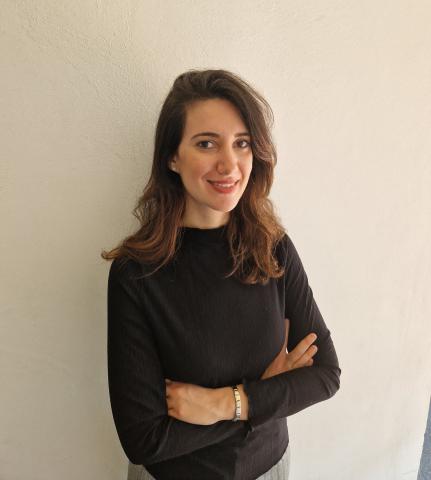
Eman Aldhafeeri is a Senior Data Management Specialist working within the Governance and Policy sector at the Research, Development and Innovation Authority in Riyadh, Saudi Arabia. With around a decade of experience in both the private and public sectors, Eman has managed a variety of international projects, ranging from planning to data-driven policymaking, with a focus on research, innovation and sustainable development. In this area, she led a project related to the SDGs in Saudi Arabia, which achieved significant impact.
Continuously seeking growth, Eman recently completed the UN Data Analytics Professional Certificate programme. In this interview with UNSSC’s Maria Fernanda Villari, she shares how attending the course strengthened her analytical thinking, boosted her confidence in working with imperfect datasets, and enhanced her ability to translate data into meaningful, actionable insights that support policy and decision-making.
Maria Fernanda: Why was it important for you to pursue the UN Data Analytics Professional Certificate, and what did you hope to gain from this learning journey with us?
Eman: Pursuing the UN Data Analytics Professional Certificate felt like a natural step for me because of the nature of my work in a government organization focused on policy, innovation and sustainable development. I was looking for a stronger analytical foundation aligned with international standards and hoping to deepen my analytical thinking beyond reporting data, especially in understanding how data can better support policy decisions and sustainable development goals.
Maria Fernanda: Looking back on the course, what part of the learning journey stood out to you most? How did those moments change the way you approach data?
Eman: One of the parts that stood out to me the most was the data storytelling component.
Before the course, there were many situations when presenting to decision-makers where the analysis itself was technically correct, but the message behind the data was not always communicated as clearly as it could be. The numbers were there, but the story connecting them to the final insight was sometimes missing.
Learning how to build a narrative around the data changed the way I approach analysis. It shifted my focus from simply presenting results to thinking more carefully about how the analysis should guide the audience toward understanding what the data actually means.
It also helped me realize that data alone does not always speak for itself. It needs context and a clear story that helps decision makers connect the numbers to real-world implications and policies.
Maria Fernanda: Could you share one or two key takeaways from your work on the case study focused on data exploration and analysis?
Eman: One important takeaway from the case study was learning how to move from identifying data issues to making analytical decisions about how to address them.
Before joining the programme, identifying problems in the data such as inconsistencies or missing values was something I was comfortable with. However, deciding how to handle those issues was not always straightforward. Choosing whether to remove certain values, adjust the dataset, or redefine variables sometimes felt like a significant responsibility.
During the case study, those decisions became a central part of the analytical process. The evaluation was not only about performing analysis but also about how we handled real data challenges along the way.
This experience helped build confidence in my analytical judgement and taught me that effective analysis is not only about identifying problems but also about making thoughtful decisions that improve the quality of the data and strengthen the final insights.
Maria Fernanda: Over the past three months, you have gone through several important steps – from submitting your proposal, participating in mentoring sessions, to completing the final report. Looking back, how would you describe this journey?
Eman: Working on the provided case study over the past three months was a very valuable experience. At the beginning, I proposed several hypotheses and statistical tests, but as the analysis progressed, I realized that some of them did not fully fit the available data. The mentoring sessions helped me rethink my approach and focus more on what the data could support. By the end of the project, the analysis had improved significantly, and the experience helped me develop a more practical and confident analytical mindset.
Since completing the course, have you applied the skills you gained in your work or within your team? Has your way you doing things changed?
Eman: Yes, several of the skills I gained during the programme have already been applied in my work, particularly in the way analytical results are communicated.
Using clearer visualizations and interactive dashboards through tools like Power BI has made a noticeable difference in how leadership engages with analytical outputs. Discussions now tend to focus more on the insights and potential decisions rather than spending time interpreting the numbers themselves.
Previously, presentations sometimes required longer explanations to clarify the findings. Now, the structure of the analysis and the storytelling approach help communicate the message more effectively and shift the conversation toward decision-making.
This change has helped show more clearly how data can support discussions around priorities and policy decisions.
Maria Fernanda: Considering the three components of this course (self-paced lessons, live sessions and on-the-job assignment with mentoring), could you share your feedback on each?
Eman: One of the strengths of the programme was how well the three components complemented each other and followed the natural lifecycle of data analysis, from exploring and preparing data to communicating insights and working with more advanced analytical techniques.
The self-paced lessons played an important role in building a strong foundation. Having the opportunity to review concepts made it easier for me to follow the discussions during the live sessions. This was particularly helpful since English is not my first language. Being able to prepare in advance made the live sessions smoother and allowed me to focus more on understanding the analytical ideas.
The on-the-job component was especially valuable. Working with predictive analysis using BigML was a new experience for me, and it provided an interesting practical perspective on how data science tools can be used to explore patterns and build predictive models.
Maria Fernanda: If someone was considering joining the course, what would you tell them based on your experience?
Eman: This programme offers much more than learning analytical tools. It changed the way I think about data. Instead of focusing only on numbers and reports, it helped me understand how data can reveal meaning and support better decisions.