Search results
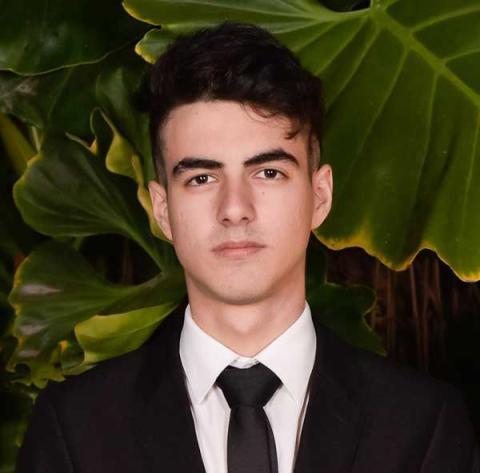
From emergency response to strategic leadership: A spotlight interview with Nkosilathi Mpala
For over 10 years, UNSSC has been strengthening the leadership and management capabilities of United Nations (UN) personnel through one of its flagship programmes, the UN Emerging Leaders e-Learning Programme. Every year over a period of seven weeks, over 100 mid-level professionals take part in an immersive virtual learning journey that deepens their self-awareness, enhances their people-management and communication skills, and builds the confidence needed to transition into greater leadership responsibilities within the UN system.
In this spotlight interview, we learn about Nkosilathi Mpala’s journey through the 2025 fall edition of the programme, the insights he gained along the way and how this learning experience has shaped his approach to leadership.
Juan: Could you start by introducing yourself and your career journey?
Nkosilathi: My name is Nkosilathi Mpala, and I am currently the Programme Management Specialist for the World Health Organization’s (WHO) Syria Country Office.
I began my career with WHO in Zimbabwe in 2018, where I worked as an Epidemic & Pandemic Preparedness and Prevention Officer for four years. I then had the opportunity to support the Syria Office as a Public Health Officer for almost a year. During that time, the position of Programme Management Specialist opened up, and I applied.
I assumed my current role in August last year, so it is still relatively new. I now lead a team of technical officers and programme assistants, managing a portfolio – which last year was worth approximately USD 100 million – spanning multiple sectors.
Juan: In your experience, what aspect of the UNEL-e programme did you find most helpful?
Nkosilathi: One of the most valuable aspects of the programme was its global nature. It brought together participants from various UN agencies, which provided a broader global perspective on shared challenges. The opportunity for co-creation and networking was particularly meaningful.
A key takeaway for me was the importance of communication. We learned that communication can make or break a programme. Leaders must communicate with clarity, purpose and strategy.
Another critical lesson was on managing up. Often, we focus on managing supervisees, but this programme emphasized how crucial it is to align expectations with supervisors and ensure convergence on goals and the bigger picture. Understanding this has been especially helpful in my role at WHO.
Juan: On a personal level, how has UNEL-e helped you develop as a leader?
Nkosilathi: Enhancing my emotional intelligence was particularly impactful for me. I work in Syria, which is a highly complex environment. In this context, team dynamics, government relations and UN coordination mechanisms are all intricate.
The programme helped me better manage myself and read situations more effectively, from knowing when to speak or when to step back to better reading the room. It strengthened my contextual awareness and ability to navigate contemporary issues within Syria.
This has been very useful for me, as relationship management is a crucial aspect of my portfolio. In my role, I engage with multiple working groups and represent WHO in programme management forums addressing strategic issues, so being capable of sustaining strong relationships is essential for achieving collective outcomes.
Juan: Do you see overlap between your work in public health and the lessons from UNEL-e?
Nkosilathi: Absolutely. The programme reinforced leadership in emergencies and the importance of co-creation. Sometimes, solutions cannot come from WHO alone – they require collaboration with other agencies, like the United Nations Children’s Fund (UNICEF) or the United Nations Development Programme (UNDP).
Attending UNEL-e strengthened my systems thinking. Health is interconnected with education and other social determinants. The programme encouraged me to think beyond a narrow agency-specific lens and helped me embrace collaborative, system-wide approaches.
Juan: What challenges have you faced, and how has the training influenced your approach?
Nkosilathi: Last year was hard across the whole UN system. One major challenge was communicating difficult news to staff, informing colleagues that contracts were ending due to funding shortfalls.
The programme helped me approach these conversations with empathy while remaining focused on organizational responsibilities. We practiced handling difficult conversations during training, and shortly afterward I found myself applying those lessons in real-life situations, sometimes speaking with colleagues who were understandably distressed.
The ability to balance empathy with accountability in those moments was crucial.
Juan: Is there one moment from the programme that really stuck with you?
Nkosilathi: Yes, the session on diversity and privilege.
As UN staff, we hold privileges: even in difficult contexts, we have platforms and access – whether engaging ministers or advocating for communities.
The session challenged the victim mentality and defeatist attitude with which we sometimes enter the room and reframed privilege as responsibility. In Syria, for example, there are situations where women’s voices may not be heard strongly. As a man, I recognized that I can use my privilege to amplify those voices and advocate for change.
It was an emotional and transformative session. It changed how I view my role, not just within WHO, but in society more broadly.
Juan: Would you recommend this programme to other emerging leaders?
Nkosilathi: Without hesitation.
Technical expertise alone is not enough. You may be strong in programme management or dashboards, but if you cannot communicate clearly, align with leadership or focus on impact, you will struggle.
This programme goes beyond technical skills. It builds leadership capacity, communication, managing up, emotional intelligence and global networking. The global network is invaluable – you gain perspectives from colleagues across regions who may have solved similar problems differently.
I would recommend this training to all UN personnel.
Juan: Do you see continuity between UNEL-e and your future career aspirations?
Nkosilathi: Yes. The programme keeps leaders engaged with contemporary issues such as AI in health or evolving monitoring and evaluation approaches.
The global network also remains an ongoing resource that encourages continuous learning and adaptation. Leadership is not developed in isolation. Sharing experiences across contexts strengthens us.
Juan: What final message would you leave for your cohort?
Nkosilathi: The global landscape is changing rapidly. We must adapt, think differently and stay agile. Emotional intelligence, communication and managing up are foundational skills for navigating uncertainty.
One facilitator spoke about leading from where you sit. Regardless of our position, we must lead with credibility, accountability, empathy and humility.
Let us not be defined by titles, but by impact. In times of chaos, strong leadership grounded in integrity can transform our organizations, communities and the UN system as a whole.